If you plan to buy a gantry crane for material handling, you will often choose between trackless gantry crane and rail mounted gantry crane. Many buyers get confused about which type matches their site condition and production schedule. This guide covers core differences, pros and cons, and practical selection tips.
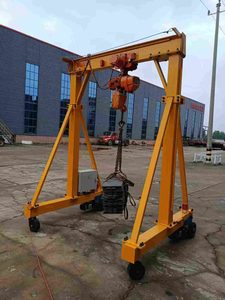
A trackless gantry crane is also called rubber tyred gantry crane. It uses solid rubber wheels to travel directly on hardened concrete floor. No embedded steel rails are required. It supports steering and free movement inside the working area. Most trackless gantry cranes adopt battery power or electric drive.
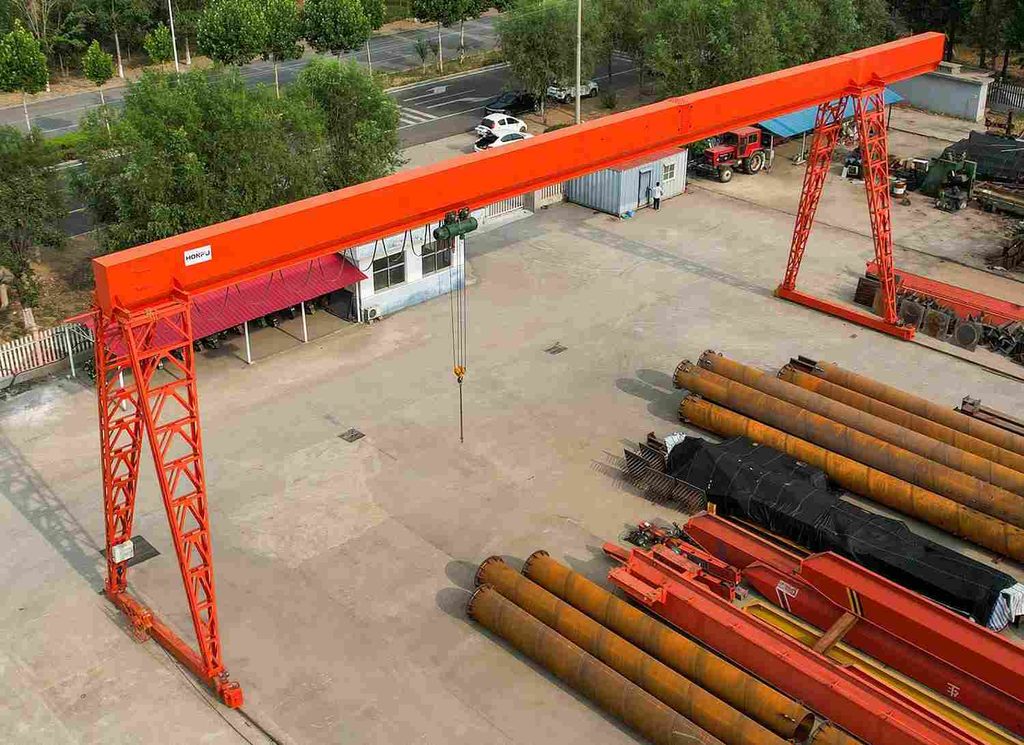
A rail mounted gantry crane runs on pre-installed steel rails. The travel path is fixed. It needs concrete foundation and rail alignment work before operation. Rail gantry cranes are widely used for long-term, repeated lifting tasks.
Core Differences Between Trackless Gantry Crane and Rail Mounted Gantry Crane
Mobility & Layout Flexibility
Trackless gantry crane can turn, shift and move to different zones. You can adjust working range when your workshop layout changes. It is easy to relocate to another yard or building.
Rail mounted gantry crane only moves along fixed rails. It cannot change travel path freely. Once rails are finished, large layout adjustment needs extra civil construction.
Site & Ground Requirements
Trackless gantry crane needs flat, solid and load-bearing concrete ground. The floor must bear wheel pressure. It cannot work on soft mud or uneven ground. No rail laying work is needed.
Rail mounted gantry crane requires foundation pouring, rail installation and calibration. Civil work takes longer time. It has stable running performance even under heavy continuous load.
Installation & Initial Cost
Trackless gantry crane has fast installation. Delivery and commissioning cycle is shorter. It saves rail and foundation budget.
Rail mounted gantry crane has higher upfront infrastructure cost. Steel rail, anchor parts and foundation construction add extra investment. The crane body itself can support larger tonnage and longer span.
Load Capacity & Stability
Trackless gantry crane suits medium tonnage lifting. It works well for 5 ton to 50 ton regular handling. Stability is good for flexible operation.
Rail mounted gantry crane supports heavy duty and high frequency work. It can reach larger tonnage and wider span. Positioning accuracy is higher for repetitive loading.
Maintenance & Power Options
Trackless gantry crane mainly maintains tires, steering system and battery packs. Check tire wear regularly to avoid slip.
Rail mounted gantry crane focuses on rail wear, rail clamp and travel wheel set. It usually connects to fixed power cable.
Pros and Cons
Trackless Gantry Crane
Advantages: No rail construction, flexible movement, quick setup, easy relocation, suitable for temporary or changing production lines. Disadvantages: Higher floor requirement, limited maximum tonnage, tire wear over time.
Rail Mounted Gantry Crane
Advantages: High stability, high positioning precision, heavy duty continuous use, low running wear on wheels. Disadvantages: Fixed route, high civil cost, hard to move after installation, long construction period.
How to Choose Between Them
Choose trackless gantry crane if your workshop has frequent layout adjustment, temporary lifting jobs, limited budget for civil works, or you need to move the crane between different working zones.
Choose rail mounted gantry crane if you have fixed long-term production lines, high daily lifting volume, heavy load requirements, and enough space and budget for rail foundation.
Common application scenarios for trackless gantry crane: steel processing workshop, precast component yard, temporary construction site, warehouse with flexible material flow.
Common application scenarios for rail mounted gantry crane: fixed cargo yard, factory long assembly line, heavy steel stockyard, port fixed loading area.FAQ
rubber tyred gantry crane
What is the main difference between trackless gantry crane and rail gantry crane?
The main difference is travel mode. Trackless gantry crane runs on rubber tires freely. Rail mounted gantry crane runs on fixed steel rails with limited travel route.
Is trackless gantry crane cheaper than rail gantry crane?
The total project cost of trackless gantry crane is usually lower because you skip rail and foundation construction.
Can trackless gantry crane work outdoors?
Yes. It can work outdoors on compacted hard pavement. Avoid muddy and uneven ground.
Which one has higher lifting capacity?
Rail mounted gantry crane supports larger tonnage and continuous heavy duty work.
Final Tips
Site condition is the first factor to confirm. Check floor bearing capacity, available space, production cycle and budget before ordering. If you are not sure, send your site size, lifting weight and working hours to the crane manufacturer for custom solution.
On the Lantern Festival, Shandong Honfu brings spring greetings to Pakistan Shandong Honfu Technology Co., Ltd. office February 18, 2019 22:44 On the eve of the Chinese New Year Lantern Festival, the wheeled gantry crane (RTG) independe...
When you plan to purchase a gantry crane for outdoor yards, precast factories or steel stock areas, you will face a common choice: single girder or double girder gantry crane. Many buyers struggle to tell which design matches their load demand, si...
A trackless gantry crane is a mobile lifting system designed to lift and transport heavy loads without requiring fixed rails. Unlike traditional gantry cranes, it uses wheels or tires for movement, allowing the crane to operate flexibly on suitabl...
 Bridge crane | Gantry crane | Suspension crane | Hongfu Crane
HelloPlease log in