When choosing a double girder overhead crane, the lowest purchase price does not always mean the lowest overall cost. QD and European double girder cranes use different design approaches, so the better choice depends on how often the crane operates, the available building space and the expected service life.
For a low-frequency lifting job, QD is often the more economical option. For high-frequency operation or projects with limited headroom, a European crane can offer better long-term value.
QD vs. European Double Girder Crane
QD Double Girder Crane
The QD double girder crane is a conventional overhead crane designed according to GB/T 14405. It typically uses a robust box-girder structure and is known for its relatively simple design, easy maintenance and lower initial cost.
QD cranes are well suited to general manufacturing workshops, warehouses and applications where lifting is intermittent and budget is a major consideration.
European Double Girder Crane
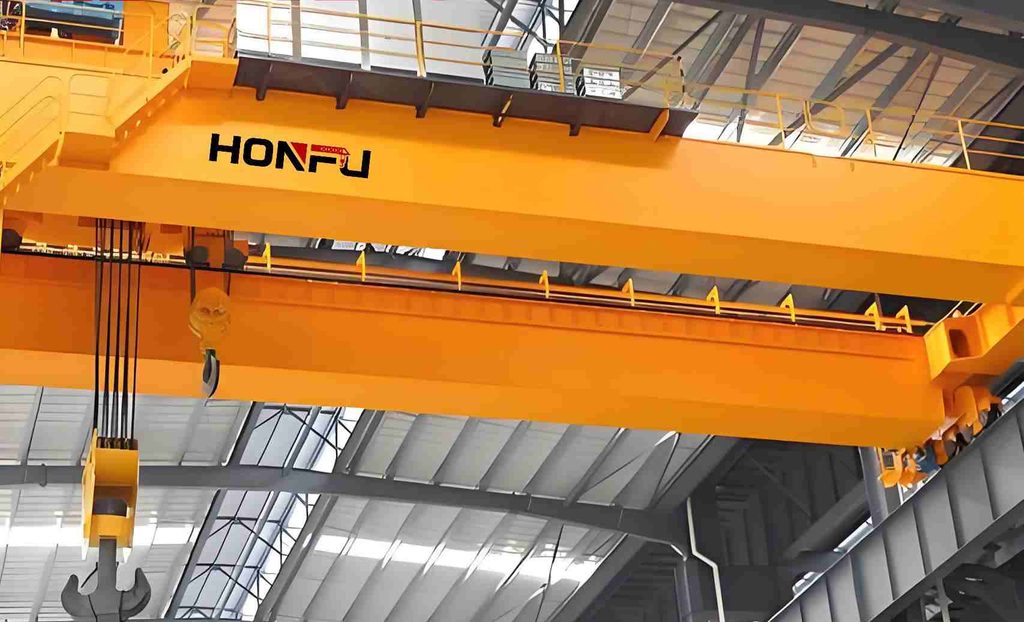
A European double girder crane generally follows FEM/DIN design principles, with more emphasis on lightweight construction, compact dimensions and modular components.
Optimized structural design can reduce the crane’s self-weight and wheel load. Compact trolley arrangements can also improve available lifting height, while variable frequency control provides smoother starting, stopping and positioning.
For frequent operation or limited factory headroom, these advantages can be significant.
Key Differences in Actual Use
Feature
QD Double Girder Crane
European Double Girder Crane
Design approach
Conventional
Lightweight & modular
Initial cost
Usually lower
Usually higher
Self-weight
Relatively higher
Relatively lower
Wheel load
Higher
Lower
Headroom
Relatively larger
More compact
Speed control
Two-speed / resistance
Variable frequency
Running smoothness
Standard
Better
Best suited for
Intermittent lifting
Frequent operation
Headroom
A conventional QD trolley usually takes up more vertical space. In a building with limited height, this can reduce the available hook lifting height.
The compact design of a European overhead crane allows the hook to reach closer to the top of the bridge structure. This can make better use of existing building height.
Wheel Load
Because QD cranes are generally heavier, their wheel loads can be higher. This should be considered when installing a crane in an older workshop.
A lighter European crane can reduce the load transferred to the runway and supporting structure. For factory renovation or crane replacement projects, this can be an important advantage.
Running Performance
QD cranes commonly use conventional two-speed or resistance control. They are reliable for ordinary material handling, although acceleration and braking may be less smooth.
European cranes typically use variable frequency drive (VFD), providing smoother acceleration, braking and load positioning. This is particularly useful for machinery assembly, mold handling and other applications where positioning accuracy matters.
Which Crane Has Better Long-Term Value?
If you only compare the initial quotation, the QD double girder crane will usually be cheaper.
The calculation changes when the crane operates frequently.
A European crane’s lower self-weight and wheel load may benefit new construction or factory renovation. Its variable frequency control can also help reduce unnecessary mechanical impact and energy consumption during repeated operation. Modular components may make maintenance more convenient.
That does not mean a European crane is always the better investment. If the crane only operates occasionally, the additional upfront cost may take much longer to recover.
My practical rule is simple:
Low frequency + limited budget → QD double girder crane
High frequency + limited headroom → European double girder crane
The actual payback depends on capacity, span, working class, operating hours and site conditions. Industry figures for weight and energy savings are only general ranges; the actual difference should be calculated for each project.
How to Choose the Right Double Girder Crane
Before selecting a double girder bridge crane, check these parameters:
Lifting capacity
Crane span
Lifting height
Working class
Daily operating hours
Lifting frequency
Available headroom
Existing runway and building capacity
Required positioning accuracy
Power supply and control method
For an existing factory, I would pay particular attention to wheel load and available headroom. For a production plant running the crane throughout multiple shifts, working class and operating efficiency deserve more attention.
This is where a manufacturer should provide more than a price list. The crane configuration needs to be checked against the actual working conditions before the final design is confirmed.
QD or European Crane: Which One Should You Buy?
A QD double girder overhead crane is usually the more cost-effective choice for low-frequency lifting, standard workshops and projects with a tight initial budget.
A European double girder crane is worth considering when the crane works frequently, building height is limited, lower wheel load is important, or long-term operating costs are a priority.
There is no universal winner. The right crane is the one that fits the actual working conditions—not simply the one with the lower quotation.
HONFU provides both QD and European-style double girder cranes and can customize the configuration according to lifting capacity, span, lifting height, working class, operating frequency and factory conditions.
FAQ
Is a QD double girder crane cheaper than a European crane?
Usually, yes. QD cranes generally have a lower initial purchase cost, while European cranes may provide better long-term value in high-frequency applications.
Which crane is better for an old factory?
A European double girder crane may be advantageous because of its lower self-weight and wheel load. However, the existing building and runway capacity must be checked before selection.
Which crane provides better lifting height?
The compact trolley design of a European double girder crane can provide greater effective lifting height when the building height is limited.
Which crane should I choose for frequent operation?
For frequent or continuous lifting, a European double girder crane is generally worth considering because of its compact structure, smoother VFD control and potentially lower long-term operating costs.
Struggling with crane gearbox noise or oil leaks in spring? Learn causes, maintenance steps, and expert tips to prevent downtime and extend gearbox life.
July 12, 24 years Xintai City "crane manufacturing" project training welder class in Honfu Company. Shandong Honfu Technology Co., Ltd. office In order to further enhance and enrich the theoretical knowledge and practical skills of the company's t...
Learn how to choose the right heavy duty overhead crane for metallurgy and manufacturing plants. Discover key parameters, selection tips, and safety requirements.
 Bridge crane | Gantry crane | Suspension crane | Hongfu Crane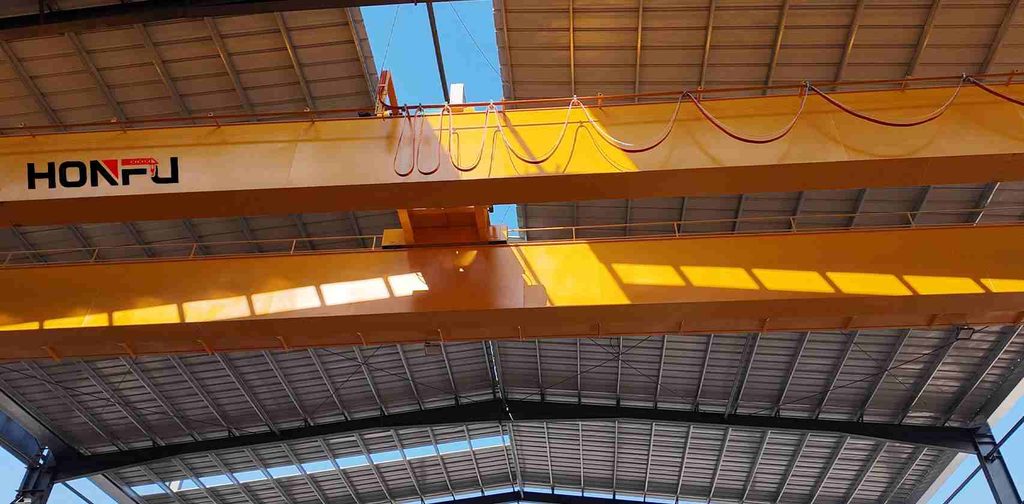
HelloPlease log in