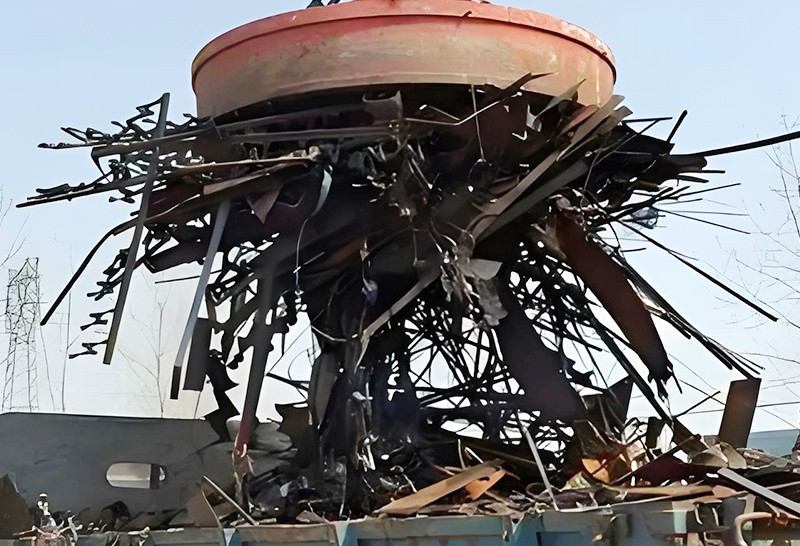
A circular lifting electromagnetis widely used with overhead cranes and gantry cranes for handling scrap steel, steel ingots, round bars, and other ferromagnetic materials. Choosing an unsuitable electromagnet may result in insufficient lifting force, excessive heat generation, unstable loads, and potential safety risks. To ensure safe and efficient lifting operations, buyers should consider several key factors before purchasing.
1. Choose the Right Magnetic Pole Type for Different Materials
The type of material being handled is the first factor to consider when selecting a circular lifting electromagnet.
Fine-Pole Circular Electromagnet: Suitable for handling lightweight scrap steel, iron chips, and thin metal materials. Its shallow magnetic penetration helps reduce the lifting of multiple layers of scrap, making material sorting and separation easier.
Standard Concentric-Pole Electromagnet: Suitable for lifting thick steel plates, steel ingots, and bundles of round steel bars. It provides deeper magnetic penetration and stronger lifting capability for heavy materials.
High-Temperature Electromagnet: Designed for handling hot steel materials in steel mills and metallurgical plants. It uses special heat-resistant materials and insulation to withstand elevated operating temperatures. Standard lifting electromagnets should not be used for high-temperature materials unless specifically designed for such conditions.
Selecting the appropriate magnetic pole structure according to material shape, thickness, and weight helps improve lifting efficiency and operational safety.
2. Check the Rated Lifting Capacity and Crane Compatibility
The rated lifting capacity is another critical factor when choosing a circular lifting electromagnet. The required magnetic force should be determined according to the material’s weight, shape, thickness, surface condition, and stacking arrangement.
The electromagnet’s rated lifting capacity should include an appropriate safety margin. It should not simply be matched to the crane’s rated capacity. Buyers must also consider the self-weight of the electromagnet, lifting beam, and other accessories when calculating the crane’s total suspended load.
The electromagnet diameter is equally important. Ideally, the diameter of the material stack should not exceed the effective magnetic contact area of the electromagnet. Materials extending beyond the magnetic face or hanging unsupported may significantly reduce the actual lifting force and increase the risk of dropped loads.
Before purchasing, confirm the crane capacity, lifting height, working conditions, material dimensions, and required lifting weight with the manufacturer.
3. Evaluate Coil Material and Protective Structure
Coil quality and protection directly affect the service life and operating stability of a circular lifting electromagnet.
Copper Coil: Copper coils provide good electrical and thermal conductivity, helping reduce temperature rise during operation. They are suitable for frequent lifting and long working hours.
Aluminum Coil: Aluminum coils offer a more economical solution and can be suitable for intermittent lifting applications, depending on the required magnetic performance and operating conditions.
Vacuum Resin Impregnation: A vacuum-impregnated sealing structure helps protect internal coils against moisture, dust, and iron debris. This is particularly important in outdoor environments, steel mills, and workshops with high humidity or heavy dust.
In addition, the power cables, cable connections, and junction boxes should have sufficient mechanical protection and reliable fastening to withstand frequent crane movements and harsh industrial conditions.
4. Select a Reliable Electrical Control System
A suitable electrical control system is essential for safe electromagnetic lifting operations.
The rectifier control cabinet supplies the required DC power to the electromagnet. A power-off magnetic holding function is particularly important because it helps maintain the magnetic holding force temporarily during a power interruption, reducing the risk of falling materials.
For applications involving frequent lifting cycles or long operating hours, an electromagnet with an appropriate cooling structure can help control temperature rise and reduce the risk of thermal demagnetization.
When selecting the control system, buyers should confirm the power supply, excitation and demagnetization requirements, duty cycle, backup power configuration, and compatibility with the crane electrical system.
Important: Power-off holding protection is not unlimited. The holding duration depends on the backup power system, load conditions, and equipment configuration. The system should be designed and tested according to the applicable safety requirements.
5. Avoid Common Mistakes When Purchasing
To avoid unnecessary costs and operational risks, pay attention to the following purchasing mistakes:
Choosing based on price alone: Low-cost products may have inaccurate lifting capacity specifications, poor insulation, and inadequate sealing protection.
Ignoring actual working conditions: Outdoor operations, high humidity, heavy dust, and high-temperature materials require specially designed protection and insulation.
Using grinding machine magnetic chucks for lifting: Grinding electromagnetic chucks and crane lifting electromagnets have different structures, magnetic characteristics, and safety requirements. They are not interchangeable.
Overlooking working frequency: Frequent lifting operations require suitable coil design, thermal management, and electrical control configurations.
For complex applications, provide the manufacturer with material types, individual load weights, material dimensions, operating temperatures, and daily working hours. These details help determine the appropriate electromagnet model and configuration.
6. Get a Customized Circular Lifting Electromagnet from HONFU
Choosing the right circular lifting electromagnet requires a comprehensive evaluation of material characteristics, lifting capacity, magnetic pole structure, coil material, protective design, and electrical control system.
HONFU specializes in crane equipment and industrial lifting solutions, providing customized electromagnetic lifting equipment for scrap steel handling, steel mills, metal processing plants, and other industrial applications.
Whether you need a fine-pole electromagnet for scrap sorting, a standard circular electromagnet for heavy steel lifting, or a high-temperature model for metallurgical operations, our team can help develop a suitable solution based on your actual working conditions.
Contact HONFU today to discuss your lifting requirements and get a customized circular lifting electromagnet solution.
Struggling with crane gearbox noise or oil leaks in spring? Learn causes, maintenance steps, and expert tips to prevent downtime and extend gearbox life.
How far can a chain turning spreader rotate? See the 0–180° range of manual models, 0–360° electric versions, how they work, and selection tips from HONFU.
Learn how to choose the right heavy duty overhead crane for metallurgy and manufacturing plants. Discover key parameters, selection tips, and safety requirements.
Single girder or double girder crane? Compare load capacity, cost, and applications to choose the right overhead crane for your workshop. Get expert selection tips.
 Bridge crane | Gantry crane | Suspension crane | Hongfu Crane

HelloPlease log in