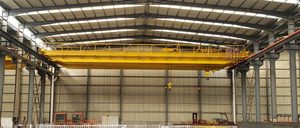
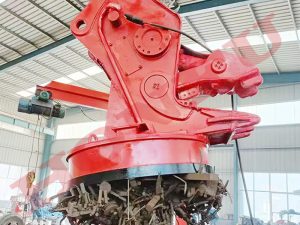
In industries such as metallurgy, mining, ports, and new energy, standard overhead cranes often fail to meet complex working conditions. Limited workshop space, high-temperature environments, explosion-proof requirements, and heavy-duty operations demand more than off-the-shelf solutions.
This is where non-standard overhead crane customization becomes essential.
Custom crane solutions are not just about adjusting dimensions—they involve a complete, end-to-end process from requirement analysis to design, manufacturing, installation, and after-sales service. The goal is simple: perfect adaptation, higher efficiency, and maximum safety.
1. Why Choose Custom Overhead Crane Solutions?
Many companies struggle with standard cranes that simply don’t fit their operational needs. Custom cranes are the optimal solution for the following scenarios:
1.1 Limited Space Applications
Low headroom workshops
Irregular span layouts
Compact installation environments
👉 Solution: Low headroom cranes or specially designed structures
1.2 Harsh Working Environments
High temperatures (steel plants)
Explosion-proof requirements (chemical industry)
Corrosive environments (coastal areas)
Dust-sensitive workshops
👉 Solution: Heat-resistant, anti-corrosion, or explosion-proof crane systems
1.3 Special Load & Operation Requirements
Heavy lifting (50T–500T+)
Irregular material handling
High-frequency operations
Precision positioning (wind power, shipbuilding)
👉 Solution: Customized lifting mechanisms and intelligent control systems
1.4 Complex Site Conditions
Outdoor uneven terrain
Narrow operating areas
Retrofit projects
👉 Solution: Flexible and modular crane designs
2. Complete Custom Crane Process (Step-by-Step Guide)
A professional non-standard crane solution follows a structured process to ensure safety, performance, and compliance.
Step 1: Requirement Analysis
This is the foundation of the entire project.
Key parameters include:
Lifting capacity
Span and lifting height
Working frequency and speed
Installation environment (indoor/outdoor)
Also define:
Special requirements (explosion-proof, remote control, anti-sway)
Budget and delivery timeline
Compliance standards
💡 Tip: Providing drawings, photos, or videos of your site can greatly improve accuracy.
Step 2: Site Inspection & Feasibility Study
Professional engineers conduct on-site evaluation:
On the Lantern Festival, Shandong Honfu brings spring greetings to Pakistan Shandong Honfu Technology Co., Ltd. office February 18, 2019 22:44 On the eve of the Chinese New Year Lantern Festival, the wheeled gantry crane (RTG) independe...
Confused about electric hoists, winches, and pulleys? Learn the key differences, applications, and how to choose the right light lifting equipment for your needs.
Learn the common causes of weak electromagnetic chuck magnetic force and discover effective troubleshooting solutions, maintenance tips, and repair methods to improve lifting safety and equipment performance.
 Bridge crane | Gantry crane | Suspension crane | Hongfu Crane