A 2 ton overhead crane is one of the most widely used lifting solutions in small and medium-sized workshops, warehouses, hardware factories, and machining plants. Thanks to its compact structure, low operating cost, flexible installation, and efficient material handling capability, it has become an ideal choice for daily lifting operations.
However, many buyers and factory owners still ask the same questions before installation:
How is a 2 ton overhead crane installed?
Does the crane require official inspection or registration?
What are the installation standards?
How can you ensure safe operation and long service life?
This guide explains the complete 2 ton bridge crane installation process, including site preparation, rail installation, electrical wiring, load testing, inspection standards, and common installation mistakes.
What Is a 2 Ton Overhead Crane?
A 2 ton overhead crane usually refers to an electric single girder overhead crane equipped with an electric hoist. It is designed for light-duty lifting tasks such as:
Material handling
Mold lifting
Equipment maintenance
Warehouse cargo transfer
Workshop production support
Typical application industries include:
Mechanical processing workshops
Hardware manufacturing plants
Assembly workshops
Storage warehouses
Mold factories
Light industrial plants
With stable operation and low maintenance requirements, the 2 ton overhead crane offers excellent value for daily factory lifting operations.
Pre-Installation Preparation for a 2 Ton Overhead Crane
Proper preparation is critical before crane installation begins. A professional installation team should complete the following checks.
1. Workshop Structure Inspection
Before installation, inspect the factory building structure carefully:
Check steel beams and support brackets
Confirm load-bearing capacity
Measure crane span and runway dimensions
Inspect rail installation elevation
Remove obstacles such as pipes, lights, and cables
Improper structural preparation may lead to crane misalignment, vibration, or unsafe operation.
2. Installation Documents & Certifications
A qualified crane manufacturer should provide:
Crane quality certificate
Factory inspection report
General assembly drawing
Electrical schematic
Material certificates
The installation contractor must also hold valid overhead crane installation qualifications and operator certifications to comply with local safety regulations.
3. Safety & Tool Preparation
Prepare all required tools and safety equipment, including:
Welding machines
Torque wrenches
Laser levels
Insulation testing devices
Lifting slings and rigging tools
Safety barriers and warning signs should be installed around the construction area. Workers performing high-altitude operations must wear proper safety protection equipment.
Standard 2 Ton Overhead Crane Installation Process
Step 1: Crane Rail Installation & Alignment
The crane runway rail directly affects operating stability.
Key installation requirements include:
Accurate positioning and layout marking
Rail fastening plate installation
Rail joint gap within 2 mm
Rail gauge deviation controlled within ±5 mm
Proper grounding resistance ≤4Ω
Both rails must remain parallel and level to prevent:
Crane skewing
Wheel wear
Rail gnawing
Operational vibration
Step 2: Main Girder & End Carriage Assembly
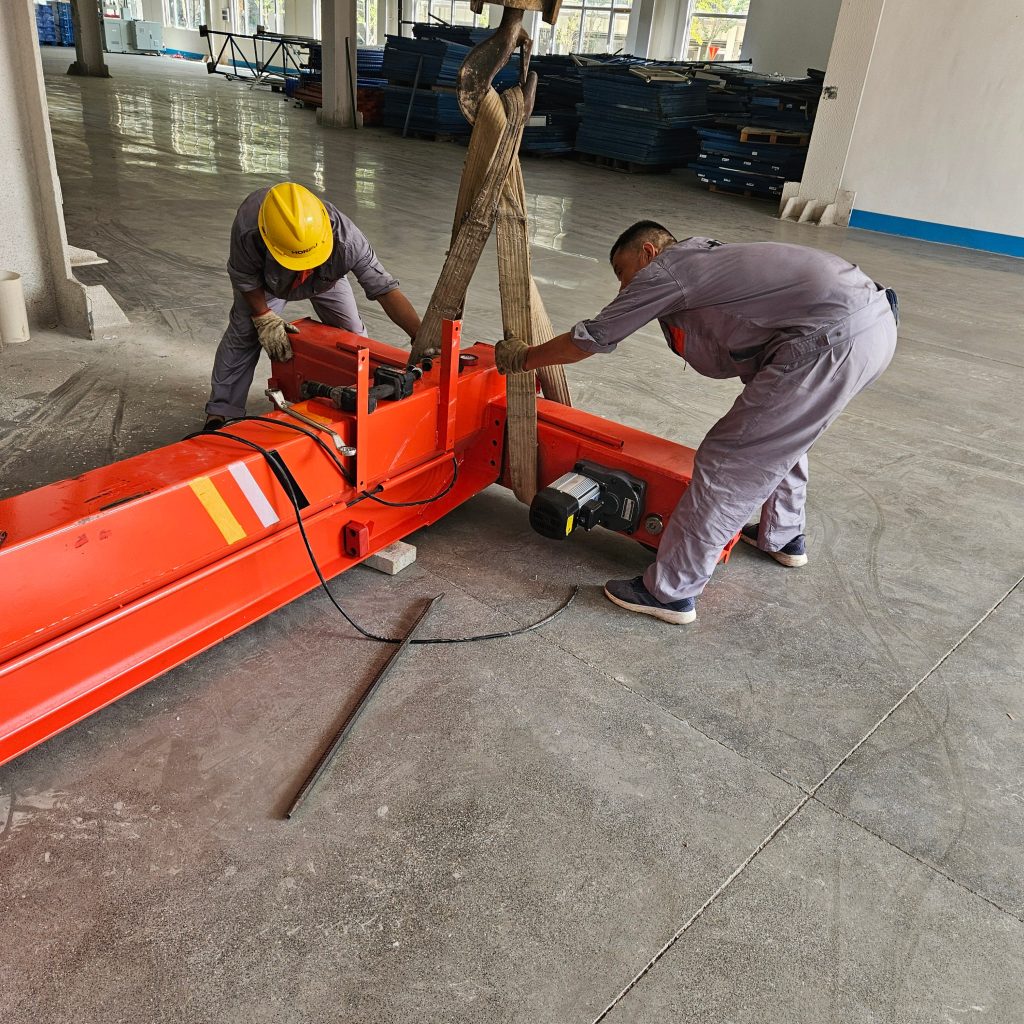
The main girder and end beams are assembled on the ground first.
Installation points:
Tighten bolts diagonally and evenly
Avoid uneven structural stress
Lift the assembled bridge carefully onto the runway
Adjust horizontal alignment and straightness
Proper assembly ensures smooth crane travel and long-term structural stability.
Step 3: Electric Hoist Installation
The electric hoist is mounted under the main girder flange.
Technicians must inspect:
Wheel clearance
Anti-drop protection devices
Hoist movement flexibility
Buffer devices
Travel limit switches
Anti-collision systems
Correct hoist installation prevents derailment, collision, and hook overtravel accidents.
Step 4: Electrical System Installation
Electrical installation must follow strict safety standards.
Key requirements include:
Metal conduit cable protection
Organized cable routing
Separation of strong and weak current systems
Sliding conductor system installation
Emergency stop switch wiring
Reliable grounding protection
Electrical wiring should strictly follow the crane electrical diagram to avoid leakage and short circuits.
Step 5: Crane Commissioning & Load Testing
After installation, the crane must pass operational testing before official acceptance.
No-Load Testing
Inspect:
Hoist operation
Crane travel
Trolley movement
Braking system
Abnormal noise or vibration
Load Testing
Professional testing usually includes:
Static load test: 125% rated capacity
Dynamic load test: 110% rated capacity
Testing verifies:
Main girder deflection
Brake performance
Limit switch sensitivity
Overall operating stability
Only qualified cranes can proceed to official inspection and commissioning.
2 Ton Overhead Crane Inspection & Registration Process
In many regions, a 2 ton overhead crane belongs to regulated lifting equipment and requires official inspection.
After installation:
A third-party inspection agency conducts testing
A supervision inspection report is issued
The crane receives a usage registration certificate
Annual inspections become mandatory
Operating a crane without inspection approval may result in penalties or forced shutdown.
Common Mistakes During Overhead Crane Installation
Many installation problems come from improper construction practices.
Mistake 1: Poor Rail Alignment
Improper rail leveling causes:
Crane skewing
Wheel wear
Excessive vibration
Mistake 2: Missing Grounding Protection
Without proper grounding, rainy or humid environments may create serious electrical hazards.
Mistake 3: Skipping Load Testing
Ignoring load tests increases the risk of:
Girder failure
Brake failure
Hook slipping accidents
Mistake 4: Unqualified Installation Teams
Unlicensed installers may fail inspection approval and create long-term safety risks.
Mistake 5: Ignoring Building Load Capacity
Installing a crane on insufficient support structures can lead to major structural accidents.
Factors Affecting 2 Ton Overhead Crane Installation Cost
Installation pricing varies depending on several factors:
Workshop height
Crane span
Runway beam modifications
Rail material
Electrical system complexity
Inspection services
Transportation distance
Local labor costs
Professional installation services usually include:
Site inspection
Rail installation
Crane assembly
Electrical commissioning
Load testing
Inspection documentation
After-sales support
Choosing an experienced installation contractor helps avoid hidden safety problems caused by low-cost construction.
Why Professional Crane Installation Matters
Although a 2 ton overhead crane is considered light lifting equipment, installation still requires strict technical standards.
A professional installation process helps ensure:
Safe lifting operations
Smooth crane movement
Lower maintenance costs
Longer service life
Successful safety inspections
Reduced downtime
From rail alignment and girder assembly to electrical wiring and load testing, every installation step directly impacts crane performance and workplace safety.
Need Professional 2 Ton Overhead Crane Installation Services?
We provide complete solutions for:
2 ton overhead crane installation
Workshop site inspection
Crane runway design
Electrical commissioning
Load testing
Inspection & certification support
Custom lifting solutions
Our certified crane installation team offers nationwide on-site service and full technical support to ensure your crane system operates safely and efficiently.
Contact us today for a free crane installation consultation and customized quotation.
Go out and learn Shandong Honfu Technology Co., Ltd. January 25, 2019 01:07 From January 20 to 22, a study and visit group led by the secretary of the Party branch of Shandong Honfu Technology Co., Ltd., and composed of the main heads of various ...
Shandong Province manufacturing high-quality development of leading talent seminar Shandong Honfu Technology Co., Ltd. office October 16, 2022 11:22 Shandong In order to fully implement the meeting spirit of the provincial Party Committee and pro...
Egyptian customers visit the factory ------- to enhance confidence in cooperation and create a better future Shandong Honfu Technology Co., Ltd. office January 27, 2024 09:56 Shandong On January 20, 2024, Mr. Ahmed Abd Alsalam and Mr. Fekry Alawdi...
 Bridge crane | Gantry crane | Suspension crane | Hongfu Crane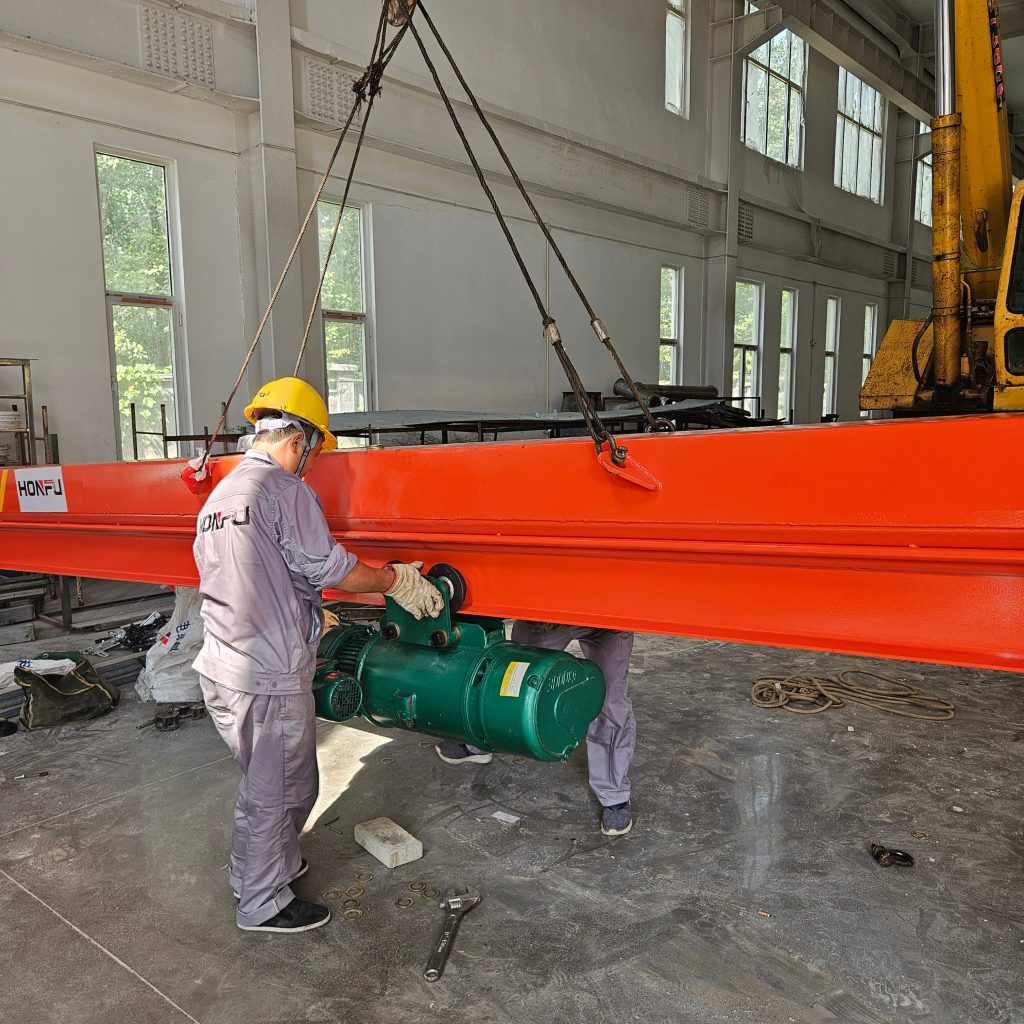

HelloPlease log in