Duty class is a core rating standard for gantry cranes. It tells buyers how frequently the crane runs, how heavy the typical load is, and its designed service life. Many buyers only focus on lifting tonnage and ignore duty class. Wrong duty class selection will cause fast wear, frequent breakdowns and safety risks.
Gantry crane duty class follows ISO 4301 and GB/T 3811 standards. The common grades for industrial gantry cranes are A3, A4, A5 and A6. The classification depends on two key factors: total working cycles and load spectrum.
Load spectrum means how often the crane lifts full rated load. A crane that rarely lifts full load has a lighter load spectrum. A crane that often works near full capacity belongs to a heavier duty class.
Introduction to Each Gantry Crane Duty Class
A3 Light Duty
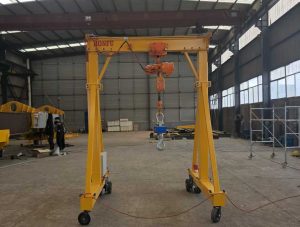
A3 gantry crane is designed for intermittent, low-frequency use. It rarely lifts full rated load. Most lifting tasks are under 50% of its capacity. It has low total working cycles over the whole service life. It usually runs only a few times per hour. Typical uses: equipment maintenance workshop, spare parts warehouse, temporary repair site. Most A3 gantry cranes are single girder type.
A4 Moderate Duty
A4 is the standard general-purpose duty class. It works several hours per day, single shift. It lifts moderate loads regularly. Full load lifting happens occasionally. It is widely used for regular material handling. This is the most popular class for small and medium workshops. Typical uses: small fabrication shop, raw material warehouse, light assembly yard.
A5 Medium-Heavy Duty
A5 gantry crane runs for long daily hours, often one or two shifts. It frequently lifts heavy loads, and full-load lifting is common. It has high cycle counts and stable continuous performance. Most double girder gantry cranes for steel yards adopt A5 duty. Typical uses: steel stockyard, precast concrete yard, machining factory, component assembly line.
A6 Heavy Duty
A6 belongs to heavy continuous duty. It works long shifts every day, with high lifting frequency. Full load is lifted repeatedly. Structures, hoists, wheels and electrical parts are reinforced for long-time heavy operation. It needs strict regular inspection. Typical uses: busy port yard, heavy steel processing plant, mass precast production line.
Comparison Table of A3 A4 A5 A6 Gantry Crane
A3: Light duty, occasional use, rare full load, maintenance & storage A4: Standard moderate duty, single shift, occasional full load, general workshop A5: Medium-heavy duty, 1–2 shifts, frequent heavy load, steel and precast yard A6: Heavy duty, continuous multi-shift, regular full load, high-frequency heavy handling
Why Duty Class Matters When Buying a Gantry Crane
First, safety. A crane with insufficient duty class will suffer fatigue damage quickly. Metal structure, hoist and brake wear faster. It increases accident risk. Second, service life. A matched duty class keeps your crane running for decades. Under-rated cranes need frequent spare part replacement. Third, cost control. Do not blindly choose A6 for light work. Higher duty class means higher purchase cost. You can save budget with A3 or A4 for low-frequency tasks.
How to Select the Right Duty Class for Your Gantry Crane
Answer these four questions before confirming the duty class.
How many hours will the crane run per day?
How many lifting cycles per hour?
How often do you lift the full rated load?
Single shift or double shift operation?
Pick A3 if you only use the crane for irregular maintenance. Pick A4 for normal single-shift workshop handling. Pick A5 for steel yard and precast yard with daily heavy lifting. Pick A6 for non-stop multi-shift heavy load production.
FAQ
What is the difference between A4 and A5 gantry crane?
A4 is for standard single-shift work with rare full load. A5 runs longer hours and lifts heavy loads frequently. Most steel yard gantry cranes use A5.
Can an A4 gantry crane lift full load?
Yes, but it should not lift full load repeatedly every day. Frequent full load on A4 will shorten its service life.
Is A6 gantry crane always better?
No. A6 costs more. If your usage frequency is low, A4 is enough and more cost-effective.
Can trackless gantry crane be A5 duty class?
Yes. Trackless rubber tyred gantry cranes can be customized to A4 or A5 duty class according to working demands.
Final Tips
Tell the manufacturer your daily working hours, lifting frequency and load condition. Professional suppliers will recommend the proper duty class and girder type (single girder or double girder gantry crane). Never select duty class only based on lifting tonnage.
When you plan to purchase a gantry crane for outdoor yards, precast factories or steel stock areas, you will face a common choice: single girder or double girder gantry crane. Many buyers struggle to tell which design matches their load demand, si...
An overhead crane electromagnetic lifting magnet is widely used in steel mills, scrap yards, and steel warehouses for handling steel plates, scrap metal, steel billets, and other ferrous materials. Choosing the right magnet requires more than cons...
Learn how to choose the right heavy duty overhead crane for metallurgy and manufacturing plants. Discover key parameters, selection tips, and safety requirements.
How fast should your electric gantry crane run? See typical lifting and travel speeds by tonnage, key safety rules, and customizable speed options from HONFU.
 Bridge crane | Gantry crane | Suspension crane | Hongfu Crane
HelloPlease log in