A Practical Selection Guide for High-Temperature, Heavy-Load Industrial Applications
In metallurgy and heavy manufacturing industries, heavy-duty overhead cranes are the backbone of workshop material handling. From lifting molten metal components to transporting massive steel structures, these cranes operate under high load, high frequency, and harsh environmental conditions.
Choosing the wrong crane configuration can lead to equipment failure, safety risks, and production downtime. Problems such as selecting an incorrect lifting capacity, ignoring environmental requirements, or choosing a low-duty working class can significantly increase long-term operating costs.
This article explains the key selection criteria, common mistakes, and practical solutions for choosing a heavy-duty overhead crane in metallurgy and manufacturing environments. Whether you are a factory procurement manager, equipment engineer, or workshop supervisor, this guide will help you make a smarter investment.
Industry Challenges: Why Metallurgy & Manufacturing Require Specialized Cranes
Unlike standard warehouse lifting equipment, cranes used in metallurgy and heavy manufacturing must meet much stricter operational requirements.
1. Continuous Heavy-Load Operation
In steel plants and heavy manufacturing workshops, cranes often operate near full load capacity for extended periods. This requires stronger steel structures, high-performance motors, and durable transmission systems.
2. High Temperature and Dust
Metallurgical workshops frequently expose equipment to extreme temperatures, metal dust, and corrosive environments. Standard cranes may fail quickly without specialized protection.
Typical requirements include:
- Heat-resistant motors
- Dust-proof electrical systems
- Corrosion-resistant structures
3. Strict Safety Compliance
Heavy-duty overhead cranes are classified as special equipment in many countries, meaning they must comply with strict safety standards and inspection regulations.
4. Large Span Workshops
Manufacturing facilities often have wide spans and complex layouts, requiring cranes with customized span lengths and lifting heights.
Because of these factors, proper crane selection is critical for long-term productivity and safety.
Key Factors in Heavy-Duty Overhead Crane Selection
Understanding the main selection parameters helps ensure that the crane meets both operational demands and safety requirements.
1. Rated Lifting Capacity: Match Real Production Needs
One of the most common mistakes is blindly selecting the largest capacity available. In reality, the rated lifting capacity should be calculated based on:
- Maximum weight of the workpiece
- Weight of lifting tools or spreaders
- Additional safety margin
For metallurgy and heavy manufacturing applications, common crane capacities include:
- 20 ton overhead crane
- 30 ton overhead crane
- 50 ton overhead crane
- 100 ton heavy-duty overhead crane
A reasonable safety margin ensures safe lifting without unnecessary equipment costs or excessive energy consumption.
2. Span and Lifting Height: Fit the Workshop Structure
The span of the crane must match the distance between the workshop rails. Incorrect calculations can lead to installation difficulties or structural modifications.
Important factors include:
- Workshop width
- Rail installation position
- Required lifting coverage
Similarly, lifting height should be determined by considering:
- Workshop ceiling height
- Maximum lifting clearance
- Equipment installation space
Proper calculations prevent costly redesign or construction delays.
3. Duty Class: Critical for Heavy Industry
The working duty class determines how frequently and intensely the crane can operate.
For metallurgy and heavy manufacturing, cranes typically require A6–A8 duty classification, which is designed for:
- High-frequency operation
- Continuous heavy lifting
- Long service life
Lower-duty cranes (A3–A5) may suffer frequent breakdowns or structural fatigue when used in heavy industry.
4. Special Configurations for Harsh Environments
Metallurgical environments often require customized crane configurations to ensure reliability.
Recommended options include:
- Heat-resistant motors for high-temperature workshops
- Dust-proof electrical cabinets
- Anti-corrosion steel structures
- Explosion-proof systems for hazardous environments
These configurations significantly extend equipment lifespan and reduce maintenance costs.
5. Essential Safety Devices
Safety systems are mandatory for heavy-duty overhead cranes and help prevent accidents during operation.
Common safety devices include:
- Overload limiter
- Upper lifting limit switch
- Anti-collision device
- Rail buffers
- Emergency stop system
These features ensure compliance with industrial safety regulations and protect both equipment and operators.
Common Mistakes When Choosing Heavy-Duty Cranes
Many factories face unexpected problems because of incorrect crane selection. Here are several common mistakes:
Mistake 1: Choosing Only Based on Price
Low-cost cranes may have lower working duty levels, leading to frequent repairs and production interruptions.
Mistake 2: Incorrect Capacity Selection
Selecting too small a capacity results in overload operation, while oversized cranes increase investment and energy costs.
Mistake 3: Ignoring Environmental Conditions
Standard cranes cannot withstand high temperatures or metal dust in metallurgical workshops.
Mistake 4: Overlooking After-Sales Service
Heavy-duty cranes require long-term maintenance support, and lack of technical service can cause operational delays.
Avoiding these mistakes helps reduce long-term operating risks and costs.
Practical Application Case
A steel manufacturing plant recently required a 50-ton heavy-duty overhead crane for transporting large steel coils in a high-temperature workshop.
After evaluating the working environment, engineers customized the crane with:
- Heat-resistant motors
- Reinforced double-girder structure
- Dust-proof electrical system
The result:
- 30% improvement in lifting efficiency
- 60% reduction in equipment downtime
This demonstrates how proper crane selection can significantly improve production performance.
How to Choose the Right Overhead Crane Manufacturer
Selecting a reliable crane manufacturer is just as important as choosing the right specifications.
Consider the following factors:
Manufacturing Certification
Ensure the manufacturer has proper certifications for special equipment manufacturing and heavy-duty cranes.
Engineering Experience
Experienced manufacturers can provide customized solutions for large-capacity cranes and complex workshops.
After-Sales Service
Reliable suppliers offer:
- On-site installation
- Technical training
- Long-term maintenance support
These services are essential for ensuring smooth crane operation.
Conclusion
Selecting the right heavy-duty overhead crane for metallurgy and manufacturing requires careful consideration of several key factors:
- Rated lifting capacity
- Crane span and lifting height
- Working duty classification
- Environmental protection configurations
- Safety devices
A properly selected crane not only improves operational efficiency and safety, but also reduces long-term maintenance costs.
If you are planning to install a large-tonnage overhead crane for your workshop, consulting experienced engineers can help determine the most suitable configuration.
Professional crane manufacturers such as Honfu Crane can provide customized selection solutions based on your workshop layout, lifting requirements, and operating conditions, ensuring reliable performance for demanding industrial applications.
 Bridge crane | Gantry crane | Suspension crane | Hongfu Crane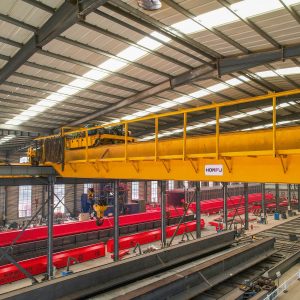
HelloPlease log in